
Lesson Ideas from SEED
These lessons (2-4 connected lessons) were created by PREL for/with grade 3 SEED students and teachers. Lessons aimed to integrate garden activities to support learning science, math, and social studies content, along with age-appropriate reading and writing skills to support learning English and local languages.
Each lesson includes learning goals, unit/lesson sequence, suggestions for assessment tools, and handouts.
Download the full lesson guide (3.6 MB)
LESSON: Measurement (Length and Height)
1-2 class sessions, 1 hour 15 minutes total
By the end of the lesson, students will be able to:
• Use key vocabulary such as long, tall, and inches to measure length and height of different things
LESSON: Making Observations and Predictions
1 class session, 30 minutes
By the end of the lesson, students will be able to:
• Use adjectives to make observation
• Ask questions about observation
• Use the word “I think” and “will” to make prediction
-
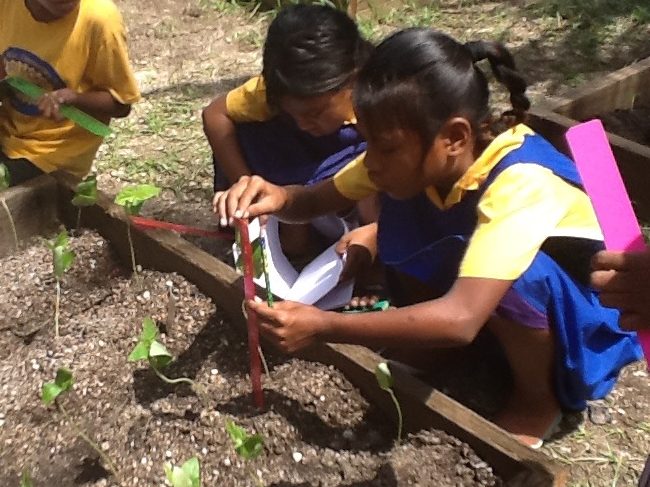
- Measuring the growth of new crops at Delap Elementary
-
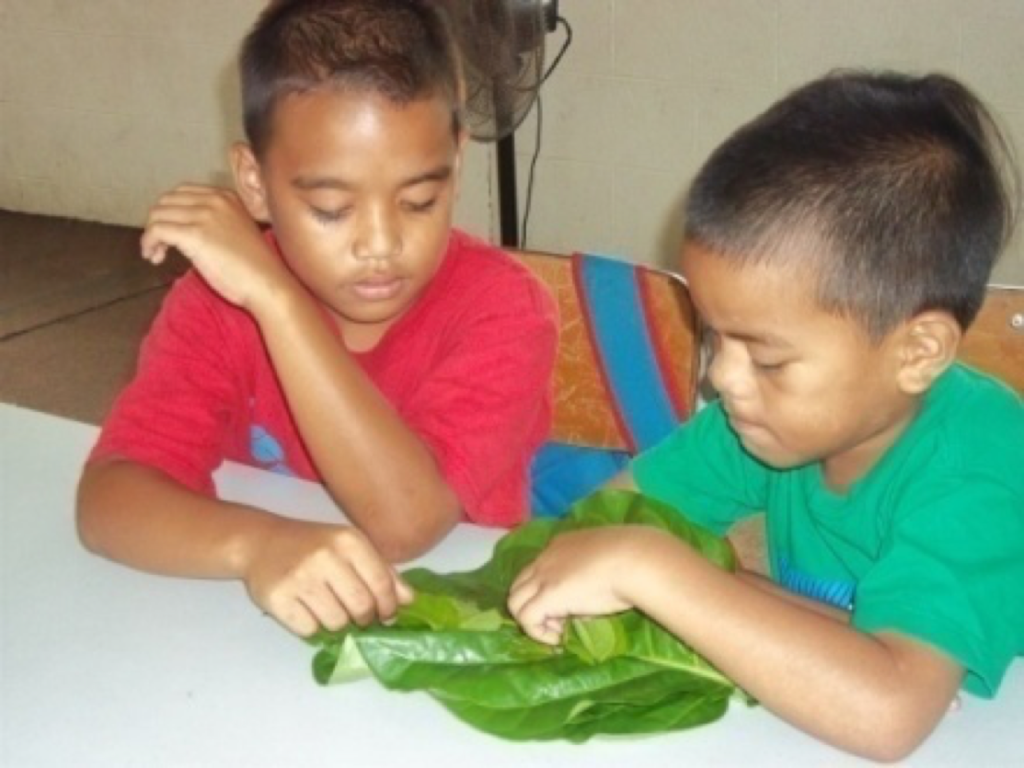
- Sansrik Elementary students making medicines
LESSON: Food Crops
2-3 class sessions, 3 hours total
By the end of the lesson, students will be able to:
• Use key vocabulary for plant parts to describe food crops, orally and in writing
• Use sequential words such as first, then, finally to describe how plants grow, orally and in writing
• Use the article “the” to describe plant growth, orally and in writing
• Summarize learning, using sentence frame “We learned about…”
LESSON: What Do Plants Need to Grow?
1-2 class sessions, 90 minutes total
By the end of the lesson, students will be able to:
• Use key English vocabulary such as seed, soil, water, and sun to explain orally and write what plant seeds need to grow
• Use the correct article (a, an) when writing
LESSON: Planting: Parts of a Plant
1-2 class sessions, 90 minutes total
By the end of the lesson, students will be able to:
• Use key vocabulary such as roots, stem, leaves, flower, fruit and “this is” and “these are” to name parts of a plant
• Create a labeled drawing for a plant found in the school community
• Summarize learning using sentence frame “We learned about…”
-
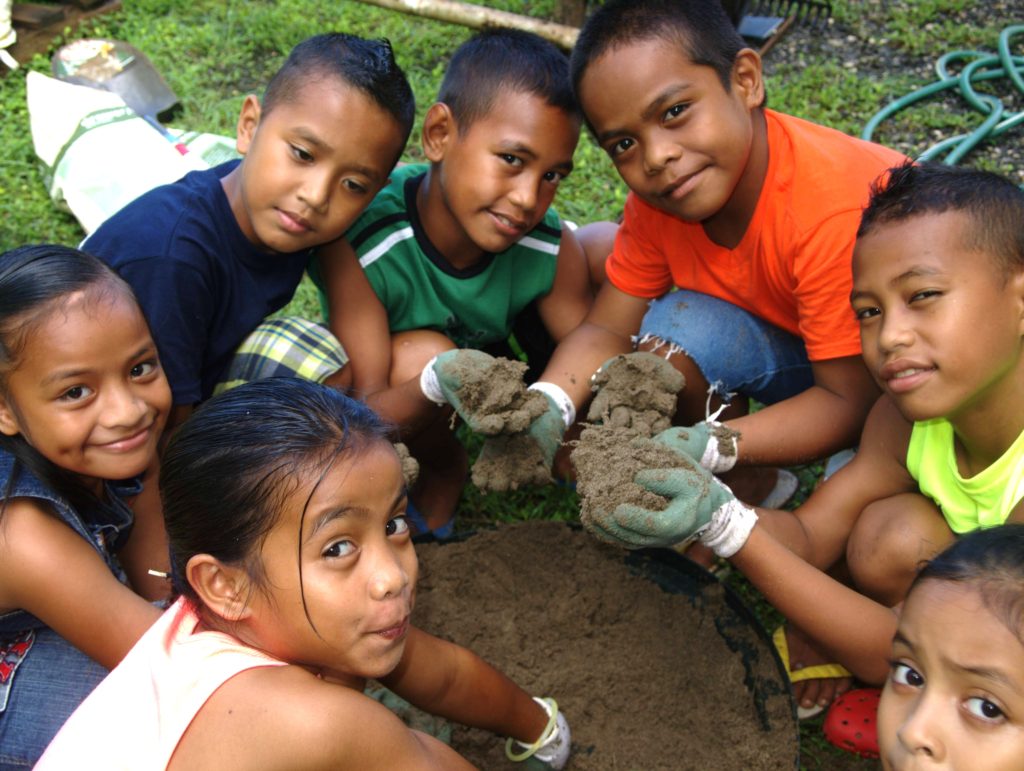
- Sansrik Elementary students starting their summer garden
-
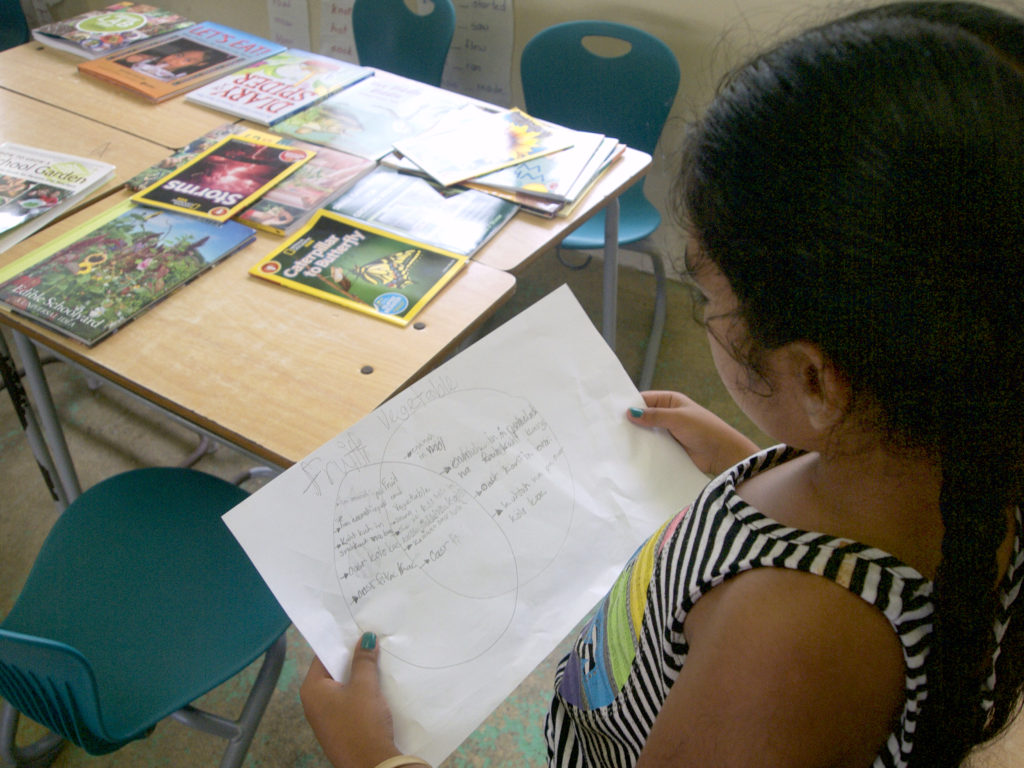
- Comparing and contrasting what we see in the garden
LESSON: Where Does Rain Come From?
1-2 class sessions, 90 minutes total
By the end of the lesson, students will be able to:
• Use key vocabulary words to explain where rain comes from
• Use the word “because” to explain why rain is important
LESSON: Build Your Own Rain Gauge
1 class session (60 minutes) to build rain gauge, plus follow up observations
By the end of the lesson, students will be able to:
• Build a rain gauge to measure precipitation
• Measure precipitation using a rain gauge to the closest 0.5 inch
• Record measurements, observations, and predictions in a journal
• State observations and predictions using key vocabulary and compound sentences
-
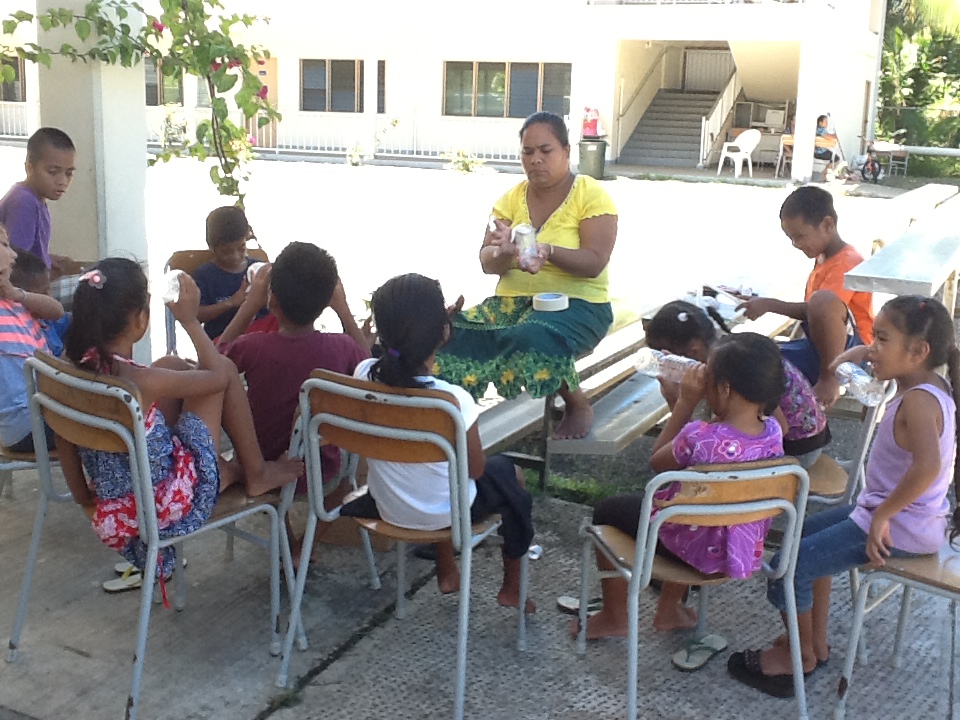
- Making rain gauges at Utwe Elementary
-
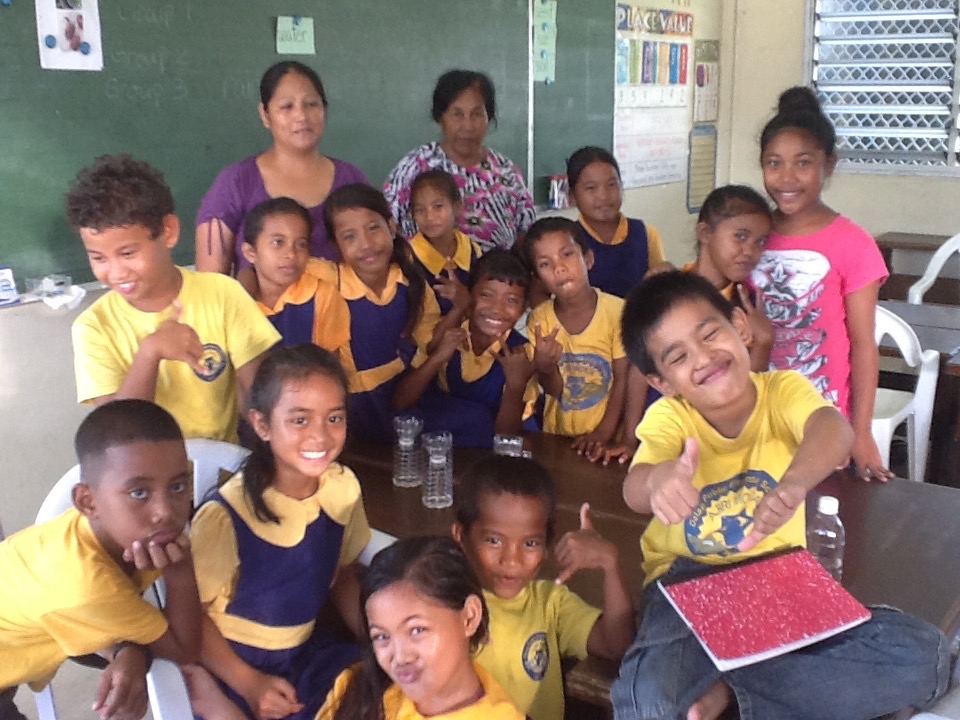
- Delap Elementary
LESSON: Eating Local: My Local Plate
Essential question: Where does our food come from?
3-4 class session, 45 minutes per session
By the end of the lesson, students will be able to:
• Identify foods that are grown locally
• Explain where common imported foods come from
• Conduct an informal interview
• Make informed predictions
• Create a diagrams to organize information, including an infographic and a Venn diagram
LESSON: Feeding Our Plants with Sea Cucumber Fertilizer
*Original fertilizer recipe by Dako Nating (teacher at Marshall Islands High School). Extension and integration ideas by Sansrik Elementary School grade 3 teachers
1 class session to make fertilizer, plus maintenance and application
By the end of the lesson, students will be able to:
• Use key vocabulary to explain how plants absorb nutrients (get food) from their roots
• Use sequential language to explain how to make and use fertilizer
-
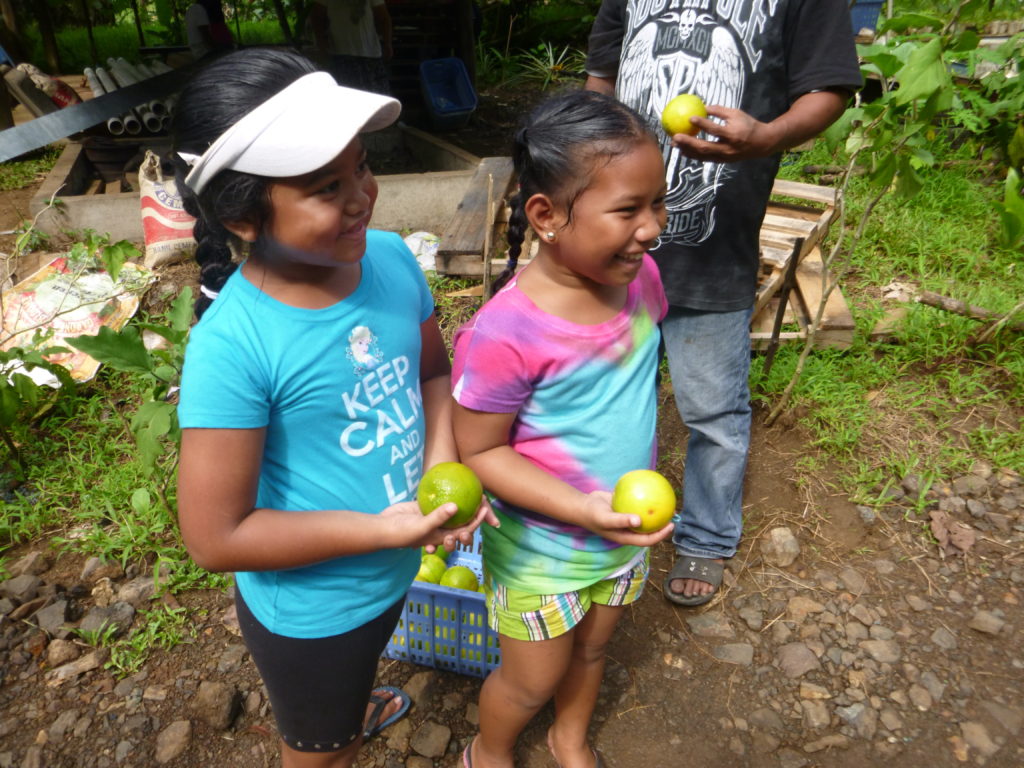
- Learning about local foods in Kosrae
-
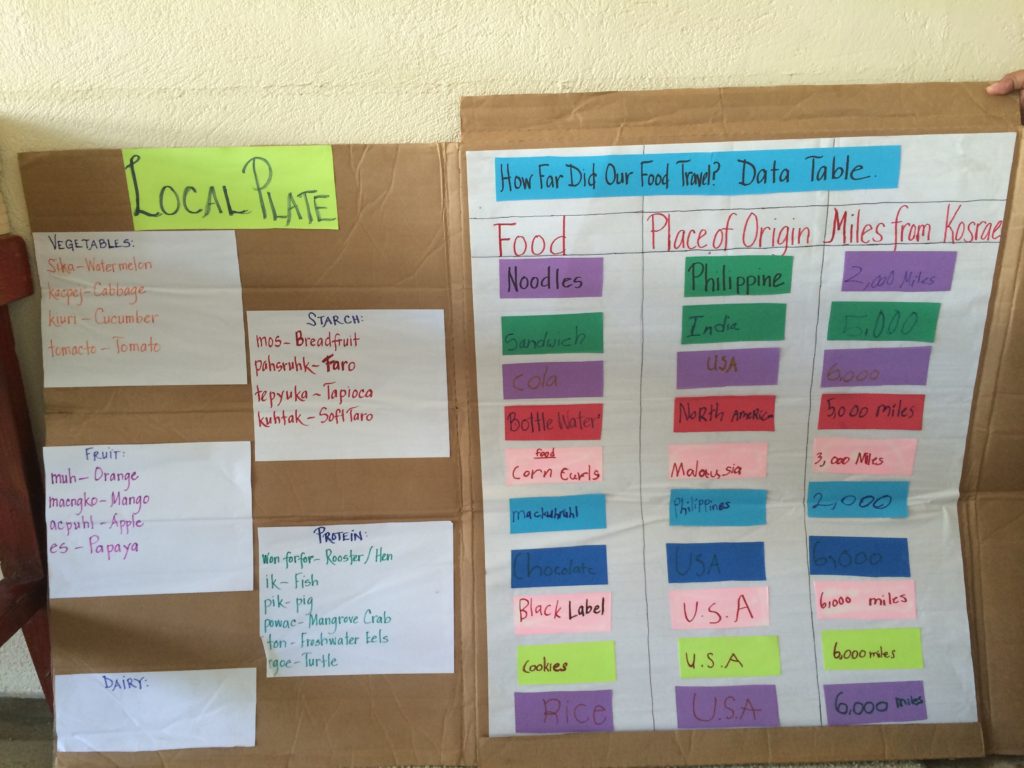
- Eating Local lesson at Utwe Elementary